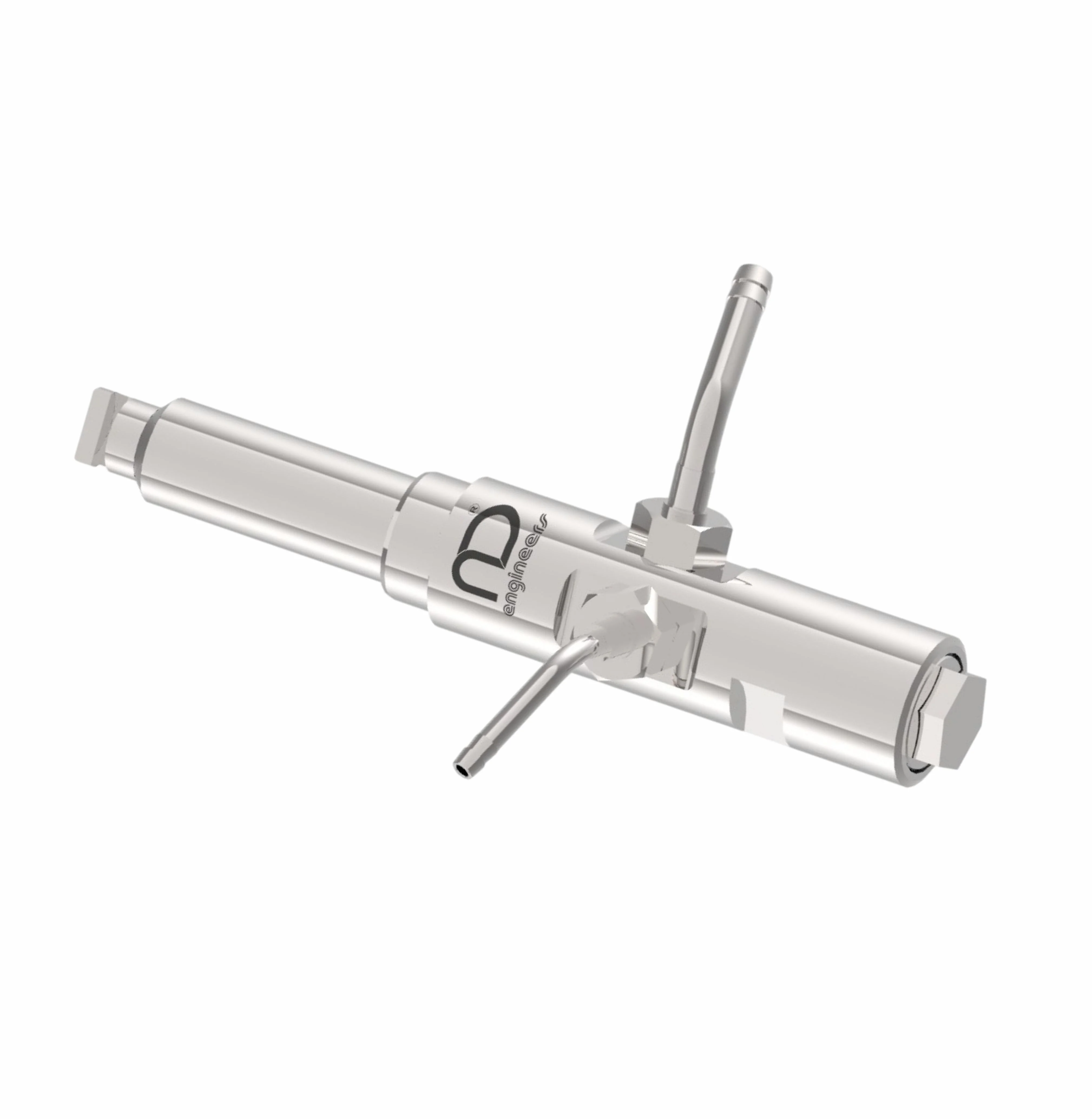

Jacketed needle for pharmaceutical processing
In the highly regulated and precise world of pharmaceutical manufacturing, maintaining the exact conditions of a product from its formulation to its final packaging is paramount. Temperature-sensitive medications, delicate formulations, and viscous solutions require specialized equipment to ensure their integrity and efficacy. This is where the jacketed needle emerges as a critical component, offering advanced control over product temperature directly at the point of dispensing. Unlike standard filling needles, a jacketed needle incorporates a secondary jacket that allows for the circulation of heating or cooling media, ensuring that the product remains within its optimal temperature range throughout the filling process.
What is a Jacketed Needle for Pharmaceutical Processing?
A jacketed needle, in the context of pharmaceutical processing, is a specialized filling needle designed with an outer jacket through which a temperature-controlled fluid (such as steam, hot water, chilled water, or glycol) can be circulated. This design allows for the active heating or cooling of the product as it passes through the needle, directly addressing challenges related to viscosity, stability, and formulation integrity. These needles are typically constructed from high-grade stainless steel, often SS 316L, a material chosen for its biocompatibility, corrosion resistance, and suitability for stringent pharmaceutical environments.
The primary function is to maintain the product at a specific, consistent temperature during the filling operation. This is particularly vital for products that can degrade, change viscosity, or lose efficacy if exposed to ambient temperatures or if temperature fluctuates during transfer and filling. By controlling the temperature at the needle tip, manufacturers can ensure uniformity across batches, prevent foaming, reduce dripping, and guarantee the precise delivery of sensitive pharmaceutical compounds.
Applications and Use Cases in Pharmaceutical Processing
The unique capabilities of jacketed needles make them indispensable in a variety of pharmaceutical applications:
- Viscosity Control: For highly viscous liquids or semi-solids, maintaining a suitable temperature is key to achieving consistent flow rates and accurate filling volumes. Heating the product within the needle reduces viscosity, preventing blockages and ensuring smooth dispensing. This is critical for products like ointments, gels, or suspensions.
- Temperature-Sensitive Formulations: Many active pharmaceutical ingredients (APIs) and biologics are sensitive to temperature variations. Jacketed needles ensure that these sensitive materials are kept within their specified thermal range, preserving their stability and therapeutic activity. This is crucial for vaccines, cell cultures, and certain complex drug formulations.
- Preventing Crystallization or Solidification: Some pharmaceutical products may tend to crystallize or solidify at lower temperatures. A jacketed needle can provide gentle warming to keep the product in a liquid state, ensuring it can be accurately filled without compromising its properties.
- Foaming and Dripping Prevention: While not solely a function of the jacket, the controlled flow achieved through temperature regulation can contribute to reducing foaming and dripping. In some advanced systems, the needle's design, combined with temperature control, ensures a clean cut-off, minimizing product loss and contamination.
- Biopharmaceutical Processing: In the production of biopharmaceuticals, maintaining precise temperature control is essential for preserving the viability of cells or the integrity of complex protein structures. Jacketed needles can be part of a larger system designed to handle these delicate materials.
Key Benefits of Using Jacketed Needles
Implementing jacketed needles in pharmaceutical filling lines offers several significant advantages:
Precise Temperature Management
Actively controls product temperature directly at the point of filling, ensuring consistency and stability.
Enhanced Formulation Integrity
Protects sensitive ingredients and delicate formulations from thermal degradation or unwanted changes.
Improved Process Efficiency
Reduces viscosity for easier filling, minimizes product loss through dripping, and ensures accurate dosing.
Consistent Product Quality
Achieves uniform filling volumes and product characteristics across all units, batch after batch.
Buyer's Guide: Selecting the Right Jacketed Needle
Choosing the correct jacketed needle is crucial for optimizing your pharmaceutical processing line. Consider the following factors:
Buyer Insight: When evaluating jacketed needles, think beyond just the temperature control. Consider the needle's material compatibility with your specific formulation, its flow path design to minimize dead volume, and its integration capabilities with your existing filling machinery.
Key Selection Criteria:
- Material Compatibility: Ensure the needle material (e.g., SS 316L) and any coatings (like Teflon) are inert and compatible with your product to prevent leaching or interaction.
- Jacket Design and Fluid Flow: Understand how the heating/cooling fluid circulates within the jacket. Efficient flow ensures uniform temperature distribution along the needle shaft. The connection ports for the jacket fluid should be compatible with your facility's utility lines.
- Internal Geometry and Tip Design: The internal diameter, length, and tip configuration (e.g., straight, chamfered, anti-drip) must be suited to your product's viscosity and your filling requirements. Specialized tips can further aid in clean dispensing.
- Integration with Filling System: The needle must be designed to fit seamlessly with your filling machine's nozzle holder or manifold. Consider the connection type and dimensions.
- Sterilization and Cleaning: The needle should be designed for easy and effective cleaning (CIP/SIP capabilities are a plus) and sterilization methods appropriate for your process.
- Customization Needs: For unique applications, custom-designed jacketed needles may be necessary to meet specific length, diameter, or tip requirements.
Quality Checks and Documentation:
Reputable manufacturers will provide comprehensive documentation and adhere to strict quality control measures. Look for:
- Material Test Reports (MTRs) confirming the grade of stainless steel.
- Certifications such as GMP and ISO compliance from the manufacturer.
- Electropolishing or passivation documentation if applicable for enhanced surface finish and hygiene.
- Precision manufacturing techniques like laser welding for robust construction.
ND ENGINEERS: Your Partner for Precision Filling Solutions
Established in 2010 in Ahmedabad, India, ND ENGINEERS (NavDurga Engineers) specializes in manufacturing high-quality spares and accessories for Pharmaceutical & Packaging Machineries. With a commitment to precision and reliability, the company offers a range of advanced solutions designed to meet the rigorous demands of the pharmaceutical industry. While specific product lines like Volumetric Syringes and various types of Dosing Pumps are prominent, ND ENGINEERS also possesses the expertise to manufacture critical components such as filling needles.
Leveraging their experience in producing precise filling needles, ND ENGINEERS can provide solutions tailored to specific processing needs. Their manufacturing capabilities, underscored by certifications like GMP, ISO, IAF, and MSME, ensure that products meet stringent industry standards. For pharmaceutical companies seeking to enhance their filling processes with temperature-controlled dispensing, ND ENGINEERS offers the technical proficiency to supply or develop specialized components, including potentially jacketed needles, designed for optimal performance, formulation integrity, and efficient operation. Their focus on quality and precision makes them a reliable partner for pharmaceutical manufacturing needs.
Frequently Asked Questions (FAQ)
What is the primary purpose of a jacketed needle?
The primary purpose of a jacketed needle is to maintain precise temperature control of the product being dispensed, either by heating or cooling, to ensure formulation integrity, manage viscosity, and achieve consistent filling results.
What materials are typically used for jacketed needles?
Jacketed needles are commonly made from high-quality stainless steel, such as SS 316L, due to its excellent corrosion resistance, biocompatibility, and durability in pharmaceutical environments. Options for coatings like Teflon may also be available for specific applications.
How does a jacketed needle help with viscous products?
For viscous products, the jacketed needle can be heated. This gentle warming reduces the product's viscosity, allowing it to flow more easily through the needle, thus ensuring accurate and consistent dispensing without clogging or requiring excessive pressure.
Can jacketed needles be used for temperature-sensitive biologics?
Yes, jacketed needles are highly beneficial for temperature-sensitive biologics. They allow for precise temperature maintenance, preventing degradation or loss of efficacy that could occur if the product is exposed to fluctuating ambient temperatures during the filling process.
What should I consider when selecting a jacketed needle?
When selecting a jacketed needle, consider the material compatibility with your product, the needle's internal geometry and tip design, the efficiency of the jacket's fluid circulation system, and its compatibility with your existing filling machinery. Documentation and manufacturer certifications are also important quality indicators.
Optimize Your Pharmaceutical Filling Process
Ensure the quality, stability, and precise delivery of your pharmaceutical products with advanced filling solutions. If you require specialized components like jacketed needles to maintain critical temperature controls and enhance your filling operations, ND ENGINEERS offers the expertise and manufacturing capabilities to meet your needs.
Explore ND ENGINEERS' Solutions